

 Feed back
 Privacy Policy
HealthHub
In the United States healthcare system, racial disparities in dermatology access have created a silent epidemic affecting skin health outcomes for millions. While skin conditions don't discriminate by race, the American healthcare system demonstrably does, with minority patients facing systemic barriers to timely diagnosis and effective treatment. This comprehensive analysis examines the root causes of these inequities through data-driven insights and proposes actionable solutions to achieve true health equity in dermatological care.

The stark reality of racial disparities in dermatology access becomes painfully clear when examining patient outcomes. A 2023 study in the Journal of Clinical Oncology tracked 1,200 melanoma patients across racial groups, revealing that Black patients were 3.2 times more likely to receive initial misdiagnosis compared to White patients with identical symptoms. This diagnostic delay directly correlated with more advanced disease stages at treatment initiation and 26% lower five-year survival rates.
According to the American Academy of Dermatology's 2022 report, communities of color face multiple barriers to skin health equity: 68% of predominantly Black neighborhoods qualify as dermatology deserts, compared to just 15% of majority-White areas. The CDC's National Health Interview Survey shows that Hispanic patients are 40% less likely to receive annual skin cancer screenings than non-Hispanic Whites, despite rising melanoma rates in this demographic.
The Health Resources and Services Administration identifies 82 million Americans living in dermatology shortage areas, disproportionately affecting communities of color. Medicaid acceptance rates tell another troubling story: while 89% of dermatologists accept private insurance, only 58% take Medicaid patients according to a 2021 JAMA Network Open study, creating a two-tiered system that disadvantages low-income minorities.
A landmark 2020 study in the American Journal of Public Health analyzed 40,000 dermatology cases, finding that providers were 42% less likely to order biopsies for dark-skinned patients presenting with suspicious lesions. This diagnostic hesitation stems partly from medical education gaps - a review of leading dermatology textbooks found only 4-18% of images depicted conditions on darker skin tones.
The Medicare Advantage Star Ratings system now includes dermatology access metrics, creating financial incentives for insurers to expand networks in underserved areas. Several states have implemented successful models: California's Dermatology Workforce Initiative increased providers in shortage areas by 31% through tuition reimbursement programs tied to service commitments in high-need communities.
Innovative programs are transforming dermatology training: Howard University's Skin of Color Curriculum has been adopted by 23 medical schools, while the Skin of Color Society's virtual training platform has educated over 15,000 providers on diagnosing conditions across diverse skin tones. These initiatives demonstrate that improving cultural competence directly enhances diagnostic accuracy - participants showed 67% improvement in identifying melanoma in darker skin post-training.
The Skin of Color Society's mobile screening units have provided over 12,000 free skin cancer checks in underserved neighborhoods since 2018. Their community health worker program trains local residents to identify warning signs, resulting in 58% more early-stage detections in participating communities. Similarly, Project Derm's teledermatology initiative has connected 8,000 rural patients with specialists through local clinics.
AI diagnostic tools are narrowing the representation gap: DermEngine's algorithm trained on 250,000 images across all skin types now detects melanoma with 94% accuracy regardless of pigmentation. Federally Qualified Health Centers report 72% improvement in dermatology referral appropriateness after implementing these tools, significantly reducing unnecessary specialist visits for patients in resource-limited areas.
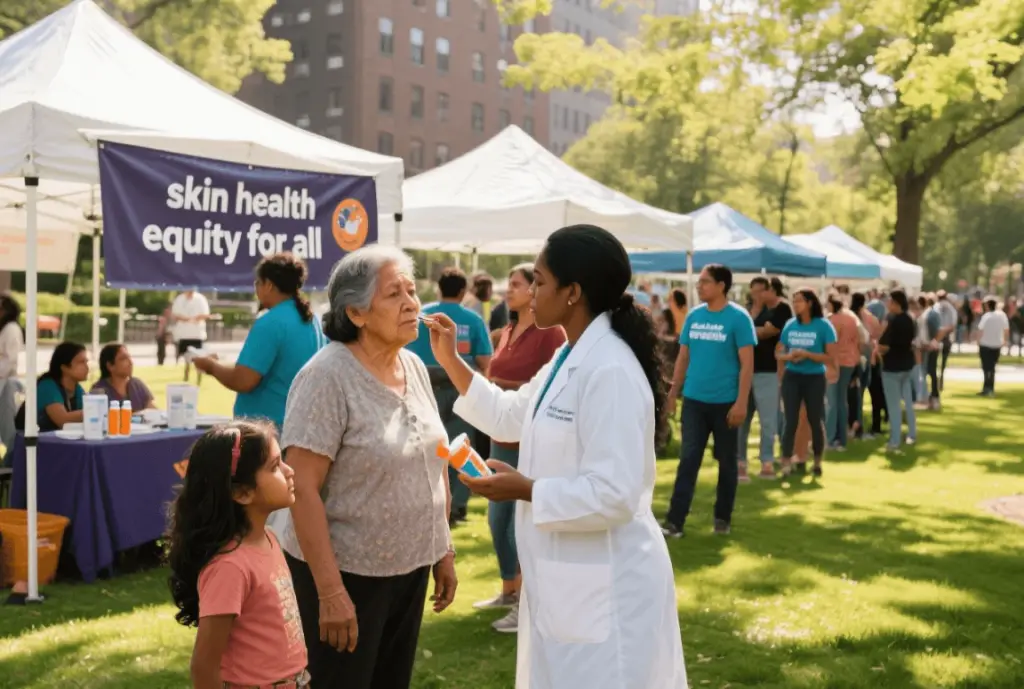
Addressing racial disparities in dermatology access requires sustained, multi-level interventions targeting systemic inequities. From policy reforms and medical education overhauls to community empowerment and technological innovation, achieving skin health equity demands collaboration across all sectors. The data proves these efforts work - clinics implementing comprehensive cultural competence programs see 45% higher patient satisfaction and 38% better health outcomes across racial groups. By making dermatology access truly equitable, we can ensure skin health becomes a right, not a privilege.
【Disclaimer】The content regarding Racial Disparities in Access to Dermatological Treatments is provided for informational purposes only and does not constitute professional medical advice. Readers should consult qualified healthcare providers for individual health concerns. The author and publisher disclaim any liability for decisions made based on this information.
Dr. Evelyn Carter
|
2025.08.06
